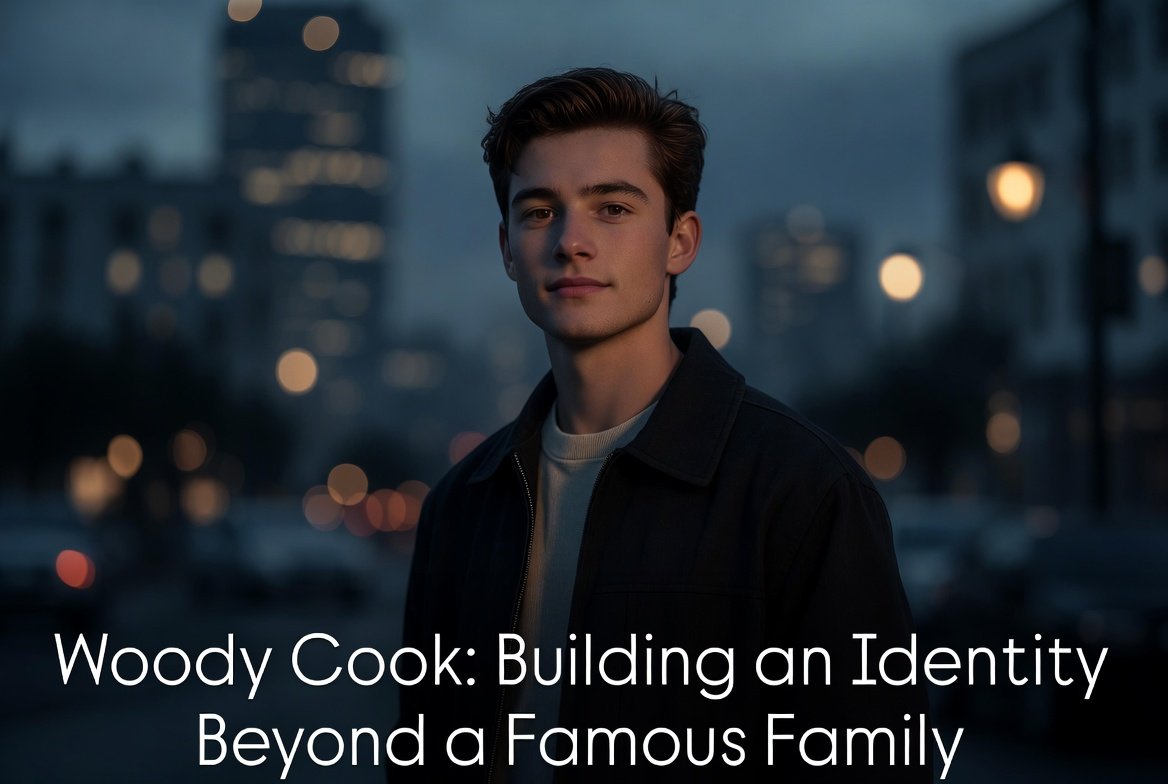

Growing up with famous parents can open doors, but it also creates expectations that are difficult to escape. For Woody Cook, the challenge has never been getting attention. It has been proving that he deserves recognition for who he is rather than whose son he happens to be.
As the son of broadcaster Zoe Ball and legendary DJ Fatboy Slim, Woody Cook has spent much of his life in the public eye. Yet over the years, he has steadily developed his own identity through music, television appearances, mental health advocacy, and honest conversations about sexuality and privilege.
For people searching “Woody Cook,” the intent is clear. They want to know who he really is beyond the headlines. This article explores his background, career journey, personal values, and why he continues to attract public interest.
Search Intent Behind Woody Cook
The keyword “Woody Cook” has primarily informational intent.
People searching for this term usually want answers to questions such as:
- Who is Woody Cook?
- How old is he?
- Who are his parents?
- What does he do professionally?
- Is he a DJ like his father?
- What television shows has he appeared on?
- What has he said about sexuality and mental health?
The goal isn’t to buy a product or navigate to a specific website. Readers simply want a complete picture of his life and achievements.
Who Is Woody Cook?
Woody Cook is a British DJ, television personality, and public figure born into one of the UK’s most recognizable entertainment families.
He is the son of radio and television presenter Zoe Ball and internationally acclaimed DJ Fatboy Slim, whose real name is Norman Cook. His parents were one of Britain’s most high-profile celebrity couples during the late 1990s and early 2000s.
Despite his famous background, Woody Cook has worked to establish himself independently rather than relying solely on family connections.
Today, he is known for his work in music, reality television appearances, and advocacy surrounding important social issues.
Growing Up in a Celebrity Household
Being raised by famous parents comes with unique experiences.
For Woody Cook, media attention wasn’t something that arrived later in life. It was present from childhood.
His mother, Zoe Ball, became one of Britain’s most successful broadcasters, while his father helped shape modern dance music through his work as Fatboy Slim. Their relationship attracted significant media interest throughout the years.
However, growing up around celebrity also meant learning how to navigate public expectations.
Many children of famous figures struggle with comparisons. People often assume success is guaranteed or entirely inherited.
Woody has repeatedly challenged that assumption.
Education and Early Interests
Like many young people, Woody Cook explored different interests before discovering the direction he wanted to pursue professionally.
Music naturally formed part of his environment.
Watching his father’s career exposed him to festivals, performances, and creative expression from an early age. However, becoming a DJ wasn’t an automatic decision.
According to his father, Woody only seriously pursued DJing after leaving home and attending university, suggesting the choice came from personal passion rather than parental pressure.
This distinction matters.
Rather than following a predetermined path, he chose music on his own terms.
Woody Cook’s Career as a DJ
One of the biggest reasons people search for Woody Cook is curiosity about his music career.
Following in Fatboy Slim’s Footsteps
Comparisons with Fatboy Slim are unavoidable.
Norman Cook remains one of Britain’s most celebrated DJs, helping popularize big beat music during the 1990s.
For Woody, entering the same industry naturally invited skepticism.
Critics questioned whether opportunities existed because of talent or family connections.
Instead of avoiding those conversations, he addressed them openly.
He acknowledged the advantages that came with his upbringing while emphasizing that maintaining a career still requires skill, dedication, and hard work.
Developing His Own Style
Although influenced by dance music culture, Woody Cook has focused on building his own artistic identity.
He has performed DJ sets at various events and festivals while gradually expanding his presence within the UK’s electronic music scene.
Rather than attempting to replicate Fatboy Slim’s style, he appears interested in creating a distinct reputation.
This independence resonates with younger audiences who appreciate authenticity.
Reality Television and Public Recognition
Music isn’t the only reason Woody Cook has become a recognizable name.
Television introduced him to a broader audience.
The Circle
One of his most notable appearances came through Channel 4’s reality competition series The Circle.
The show’s unique format challenged contestants to build relationships through social media profiles while navigating deception and strategy.
His participation showcased a personality that many viewers found relatable, humorous, and genuine.
Instead of presenting himself as a celebrity child, he came across as approachable and self-aware.
That authenticity helped expand his public profile.
Speaking Openly About Sexuality
Another reason Woody Cook stands out is his willingness to discuss topics that many public figures avoid.
He has openly identified as pansexual.
Rather than treating sexuality as something controversial, he has framed it as a natural part of identity.
His honesty has resonated with younger audiences navigating similar experiences.
Representation matters.
Seeing someone discuss sexuality without shame can encourage acceptance and understanding.
For many people, Woody Cook’s openness demonstrates confidence and self-awareness rather than a desire for publicity.
Mental Health Advocacy
Public conversations around mental health have evolved significantly in recent years.
Woody Cook has contributed to these discussions by speaking candidly about emotional well-being and the pressures young people face.
Social media creates constant comparisons.
Fame adds another layer of scrutiny.
Combining both can become overwhelming.
By discussing these realities honestly, he helps normalize conversations around seeking support and prioritizing mental health.
Many followers appreciate this vulnerability because it feels genuine rather than performative.
Addressing the “Nepo Baby” Debate
Perhaps no topic follows celebrity children more closely than accusations of nepotism.
Woody Cook has frequently been asked whether his success stems primarily from privilege.
Rather than denying his advantages, he acknowledges them.
He recognizes that having famous parents created opportunities unavailable to many people.
At the same time, he argues that opportunities alone cannot sustain a career.
Audiences ultimately decide whether talent deserves support.
This balanced perspective has earned respect from both critics and supporters.
It reflects a broader cultural conversation about privilege, accountability, and merit.
Relationship With His Parents
Despite their separation, Zoe Ball and Norman Cook have remained supportive parents.
Their family dynamic often attracts public interest because both parents continue enjoying successful careers.
Woody has spoken positively about maintaining close relationships with them.
Recent appearances, including DJ performances alongside his father, demonstrate mutual support and shared passion for music. Father and son even performed together at Glastonbury, delighting festival audiences.
These moments highlight family connection rather than celebrity spectacle.
Why People Relate to Woody Cook
Although his background appears extraordinary, many aspects of Woody Cook’s story feel familiar.
Young adults today often struggle with:
- Defining personal identity
- Escaping expectations
- Managing mental health
- Exploring sexuality
- Building independent careers
- Navigating social pressure
His experiences mirror these broader challenges.
The difference is that he navigates them publicly.
That relatability explains why audiences continue following his journey.
What Makes Woody Cook Different?
Many celebrity children attempt to leverage family fame without developing their own voice.
Woody Cook appears determined to avoid that path.
Several qualities distinguish him:
Authenticity
He rarely presents a polished image designed solely for approval.
Self-Awareness
He openly discusses privilege instead of pretending it doesn’t exist.
Advocacy
His willingness to address sexuality and mental health creates meaningful conversations.
Independence
He consistently works toward building an identity separate from his parents.
Together, these traits help explain why interest in him continues growing.
Frequently Asked Questions
Who are Woody Cook’s parents?
Woody Cook is the son of broadcaster Zoe Ball and DJ Fatboy Slim, whose real name is Norman Cook.
What does Woody Cook do?
He works as a DJ and television personality while also speaking openly about mental health and sexuality.
Is Woody Cook a DJ like Fatboy Slim?
Yes. Although inspired by music culture growing up, he chose to pursue DJing independently and continues developing his own style.
Has Woody Cook appeared on television?
Yes. He gained wider recognition through appearances on reality television, including Channel 4’s The Circle.
What is Woody Cook known for besides being famous parents’ son?
He is recognized for his honesty about identity, advocacy work, DJ career, and efforts to establish himself independently.
Conclusion
Woody Cook’s story is about far more than celebrity lineage.
Yes, he grew up surrounded by fame. Yes, he benefited from opportunities many people never receive. But reducing his identity to those facts overlooks everything else.
He has pursued music by choice, embraced difficult conversations about sexuality and mental health, and approached public scrutiny with unusual honesty. Rather than rejecting his family background or depending entirely upon it, he has learned to exist somewhere in between.
As his career continues evolving, Woody Cook represents a generation increasingly defined not by inherited expectations but by authenticity, self-awareness, and the courage to carve out an individual path.
you may also read
noblewrites